
UK-EU Trade Relations: Andy Burnham Seeks Access to Europe’s ‘Made in Europe’ Plan
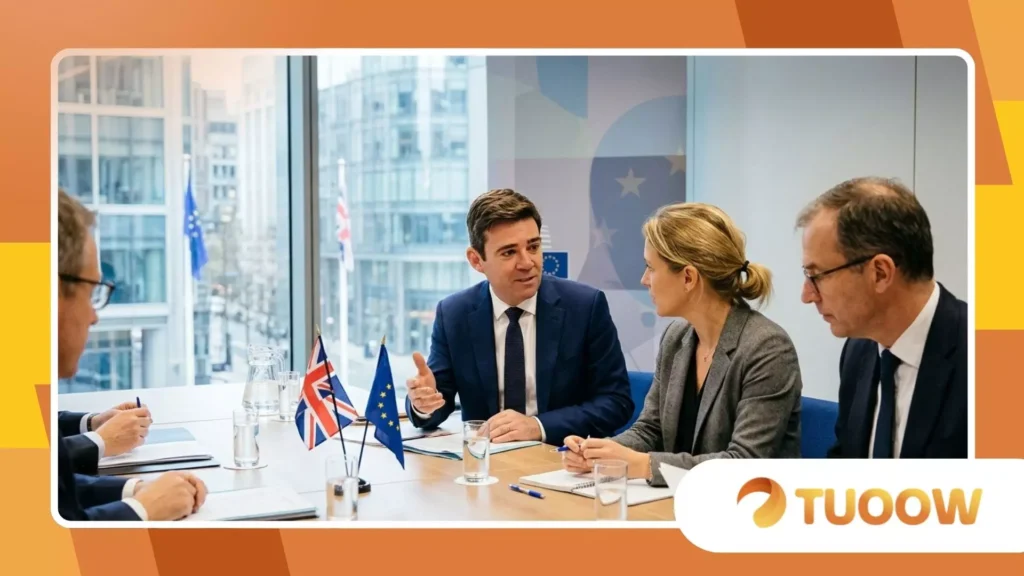
The geopolitical and economic landscape following Brexit continues to evolve, forcing regional leaders across the United Kingdom to seek pragmatic solutions to trade barriers.
Greater Manchester Mayor Andy Burnham has recently stepped into the spotlight, urging national and international policymakers to allow British regions tailored access to the European Union’s ambitious ‘Made in Europe’ industrial strategy.
As regional economies attempt to navigate ongoing friction, understanding the trajectory of UK-EU trade relations becomes critical for businesses, investors, and local government authorities alike.
This strategic push reflects a growing movement amongst regional civic leaders who recognise that macroeconomic stability relies on sub-national trade integration.
While Westminster remains responsible for overarching treaty negotiations, civic hubs like Greater Manchester are actively working to protect key industrial sectors such as clean technology, advanced manufacturing, and digital innovation from being left behind in the global race for green transition subsidies.
Key Takeaways in This Guide
- The Regional Push: Why Andy Burnham is lobbying for sub-national access to EU green supply chains and industrial plans.
- The ‘Made in Europe’ Framework: Understanding the EU’s strategic subsidies and what exclusion means for UK manufacturers.
- Current Post-Brexit Dynamics: Evaluating the Trade and Cooperation Agreement (TCA) alongside practical trade statistics.
- Sectoral Impact Matrix: How sub-national initiatives could safeguard automotive, tech, and manufacturing sectors.
- Looking Ahead: Legal constraints, political feasibility, and the future outlook for UK regional diplomacy.
The Drive for Regional Diplomacy in Modern Trade
Andy Burnham’s bid to secure access to the European Union’s industrial initiatives marks a significant shift in how devolved authorities interact with foreign economic blocs.
Traditionally, foreign policy and international trade agreements fall strictly within the purview of the UK Central Government via the Foreign, Commonwealth & Development Office (FCDO) and the Department for Business and Trade (DBT).
However, the real-world impact of trade friction is felt most acutely at the municipal and regional levels.
By advocating directly for regional inclusion in European supply chain strategies, Burnham highlights the reality facing regions heavily dependent on advanced manufacturing.
Northern England, particularly the Greater Manchester city-region, relies on seamless export routes to continental Europe.
Exclusion from European industrial funds risks diverting capital investment away from British manufacturing hubs towards EU member states that benefit directly from European Commission grants.
This sub-national strategy is not merely a political statement; it represents a functional approach to economic survival.
By forging direct ties with European industrial centers and regional governments across Germany, France, and Spain, local leaders hope to establish bilateral corridors.
These corridors aim to preserve joint research and development programs, retain high-value engineering jobs, and keep regional supply chains competitive against global economic headwinds.
Decoding the EU ‘Made in Europe’ Industrial Strategy
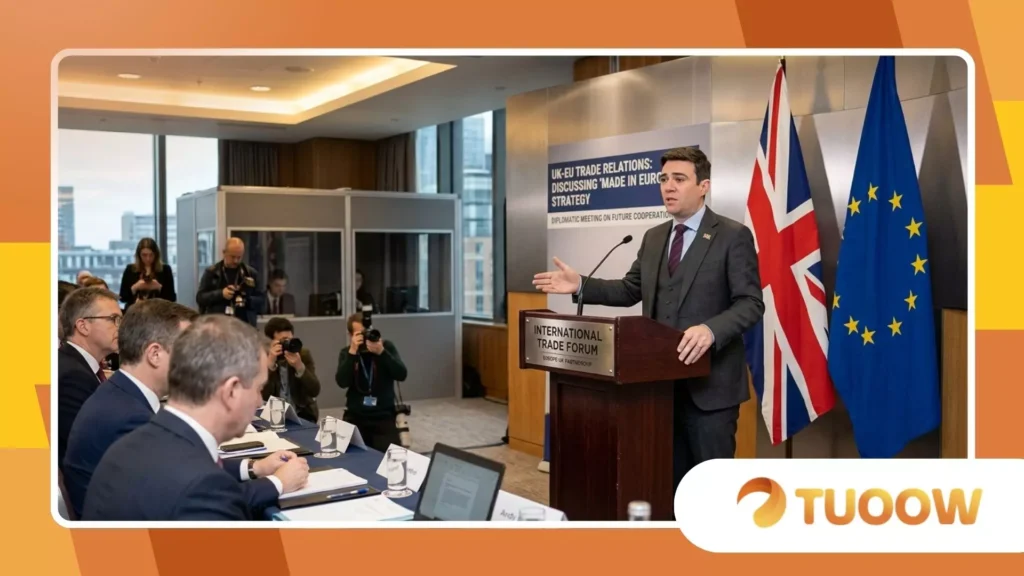
To appreciate the urgency behind Andy Burnham’s proposal, one must understand the structure of the European Union’s ‘Made in Europe’ initiative.
Emerging partly as a countermeasure to the United States’ massive Inflation Reduction Act (IRA), the EU framework is designed to massively subsidise local clean-tech industries, European green energy hardware, and domestic manufacturing capabilities.
The core goal of the European strategy is to ensure that critical technologies ranging from electric vehicle batteries to hydrogen electrolysers are sourced and built within the single market.
For businesses operating outside the EU single market, this creates a formidable non-tariff barrier.
UK-based firms face potential exclusion from European public procurement processes and subsidy eligibility unless specific exemptions or bilateral agreements are negotiated.
For British manufacturers operating in the North West of England, being excluded from this continental alliance threatens to disrupt established supply chains.
Components manufactured in Manchester or Lancashire for European assembly lines risk failing “rules of origin” requirements or losing priority against EU-based competitors.
Burnham’s appeal seeks to bridge this gap by offering European partners a collaborative framework focused on shared decarbonisation goals rather than political friction.
++ Sadiq Khan car fine: what the City Hall case means for London
Evaluating the State of UK-EU Trade Relations
Since the implementation of the Trade and Cooperation Agreement (TCA), businesses across the United Kingdom have adapted to a complex array of regulatory checks, customs declarations, and sanitary and phytosanitary (SPS) controls.
While the TCA secured tariff-free and quota-free trade for goods originating within the UK or EU, it introduced substantial administrative friction that disproportionately impacts small and medium-sized enterprises (SMEs).
Official figures published by the Office for National Statistics (ONS) and economic analyses from the Bank of England demonstrate that trade intensity between the UK and the European Union has experienced structural adjustments.
While large multinational corporations have largely absorbed the regulatory burden, regional manufacturers continue to face logistical delays, increased freight charges, and complex compliance testing.
The ongoing friction underlines why local leaders are looking beyond standard diplomatic channels.
Establishing localized agreements or regional exemptions offers a practical pathway to mitigate trade erosion.
By focusing on shared technical standards, joint academic research, and green technology cooperation, regional leaders aim to stabilize broader commercial ties without breaching existing international treaties.
Also read: British Economy 2026: Are Families Finally Seeing Relief From Rising Prices?
Structural Alignment: Sectoral Analysis
The table below outlines how key UK regional sectors are affected by current trade barriers and how Burnham’s proposed access to European industrial frameworks could mitigate these disruptions.
| Industry Sector | Current TCA Friction | Impact of ‘Made in Europe’ Exclusion | Potential Benefit of Burnham’s Proposal |
| Advanced Manufacturing | Rules of origin requirements, customs paperwork | Loss of primary supplier status to EU OEMs | Direct inclusion in continental supply chains |
| Clean Technology & Green Energy | Divergent regulatory frameworks for carbon pricing | Exclusion from European green transition funds | Shared R&D projects and joint investment pools |
| Automotive & EV Batteries | Phased-in rules of origin on battery components | Tariff exposure on cross-border EV assembly | Protected bilateral trading corridors for components |
| Digital & Tech Services | Data protection adequacy monitoring | Potential barriers to cross-border data flows | Streamlined regional tech hubs and talent sharing |
Legal Realities and the Limits of Sub-National Diplomacy
While the ambition of municipal leaders is clear, significant legal and constitutional hurdles restrict what regional mayors can achieve independently.
Under international law, trade agreements are negotiated exclusively between sovereign states in this case, the UK sovereign government and the European Commission representing the 27 EU member states.
The European Union strictly guards the integrity of its single market.
European negotiators historically reject attempts at “cherry-picking” single market benefits without accepting the associated responsibilities, such as freedom of movement or dynamic alignment with EU laws.
Consequently, any agreement brokered by a regional authority must operate within the boundaries of existing bilateral treaties or take the form of non-binding memorandums of understanding (MoUs).
Despite these limits, sub-national diplomatic engagements carry real economic weight.
Memorandums of Understanding can facilitate civic partnerships, streamline local trade missions, encourage cross-border university research collaborations, and build political momentum for broader national policy changes.
When assessing UK-EU trade relations, these regional efforts serve as vital incremental steps toward reducing trade barriers and fostering long-term cooperation.
Read more: Why narrative DLCs are now premium experiences
Strategic Implications for UK Businesses and Investors
For commercial entities operating within the UK, navigating regional and national trade dynamics requires a proactive approach.
Business leaders can no longer rely solely on national policy directives to secure market access; they must actively adapt their operational strategies.
Actionable Steps for Regional Exporters
- Conduct Rigorous Supply Chain Audits: Map every component’s origin to ensure compliance with TCA rules of origin, particularly concerning upcoming shifts in green technology regulations.
- Leverage Local Enterprise Partnerships: Engage directly with regional Combined Authorities (such as Greater Manchester or the West Midlands) to participate in targeted international trade missions.
- Establish an EU Subsidiary or Presence: Consider setting up a physical presence within an EU member state to maintain friction-free access to continental customers and European subsidy programs.
- Utilise Official Advisory Resources: Consult official guidance on GOV.UK and seek technical insights from the Department for Business and Trade regarding specialized export controls and compliance standards.
Businesses should also consult legal, financial, and regulatory specialists to review complex cross-border arrangements.
Because international trade policies and tax frameworks evolve rapidly, expert guidance remains essential for maintaining compliance and profitability.
Perspective on Structural Trade Dynamics
The persistent attempts by regional leaders to secure direct access to European economic initiatives underscore a broader reality: local economies require practical, flexible trade frameworks.
While overarching foreign policy remains centralized in Westminster, the economic pressure on local manufacturing drives creative sub-national diplomacy.
Over time, these local initiatives may shape the broader national consensus on trade policy.
Evaluating the Long-Term Outlook
As the UK and EU prepare for periodic reviews of the Trade and Cooperation Agreement, regional advocacy will play a crucial role in shaping future adjustments.
Leaders like Andy Burnham are establishing a blueprint for how local government can influence international economic discussions.
A successful regional approach will not replace national treaties, but it can provide targeted relief for key industrial sectors.
By focusing on mutual interests such as achieving net-zero emissions, advancing digital innovation, and building resilient industrial supply chains regional leaders can help foster a more stable economic relationship between the UK and the European Union.
Ultimately, the future of UK-EU trade relations will likely depend on a combination of national negotiations and regional pragmatic cooperation.
Businesses that monitor both national policy developments and regional initiatives will be best positioned to navigate regulatory changes, minimize trade friction, and capitalize on new international growth opportunities.
Concluding Synthesis: The Future of UK-EU Regional Engagement
The attempt by Mayor Andy Burnham to integrate Greater Manchester into Europe’s industrial framework highlights a fundamental reality of the post-Brexit economy: practical economic needs often require flexible solutions.
As global competition intensifies and the transition toward net-zero technology accelerates, the demand for clear, frictionless commercial channels between the United Kingdom and the European Union remains high.
While structural legal limitations prevent devolved authorities from entering into independent international treaties, their capacity to build strategic alliances, lead trade delegations, and lobby for targeted exemptions is increasingly significant.
These municipal diplomatic efforts act as a vital stabilizing mechanism, helping to protect regional manufacturing bases and maintain technical alignment in key growth sectors.
Looking forward, the evolution of trade dynamics will depend heavily on whether national policymakers incorporate these regional insights into upcoming reviews of the Trade and Cooperation Agreement.
Businesses and local industries that adapt to this multi-tiered trading environment combining national regulatory compliance with regional networking will be best equipped to secure long-term growth and maintain international competitiveness.
Frequently Asked Questions
What is the ‘Made in Europe’ plan?
The ‘Made in Europe’ initiative is part of the European Union’s broader green industrial strategy.
It aims to boost continental manufacturing of net-zero technologies through subsidies, streamlined permitting processes, and relaxed state aid rules for EU member states, helping European companies compete globally.
Can a regional Mayor sign independent trade deals with the EU?
No. Under international law and the UK constitution, formal trade agreements can only be negotiated and signed by the UK Central Government.
Regional leaders can, however, sign non-binding Memorandums of Understanding (MoUs), organize trade delegations, and lobby both Westminster and Brussels for regional considerations.
How does the TCA affect regional UK exporters?
The UK-EU Trade and Cooperation Agreement (TCA) allows tariff-free and quota-free trade in goods, provided those goods meet specific rules of origin requirements.
However, it introduces non-tariff barriers, such as customs declarations, regulatory compliance checks, and potential delays at ports, which increase costs for regional exporters.
How can UK businesses benefit from regional trade initiatives?
By engaging with local combined authorities and regional mayor’s offices, UK businesses can participate in specialized trade missions, gain access to regional investment funds, and build direct networks with international partners without waiting for national policy shifts.
