
State Pension underpayment UK 2026: who could claim thousands
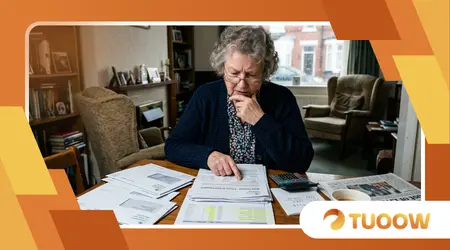
The Department for Work and Pensions (DWP) has been quietly correcting one of the largest administrative failures in British welfare history.
For decades, systemic computing glitches and human errors left tens of thousands of retirees predominantly women receiving far less than their legal entitlement.
As we navigate 2026, the DWP’s multi-year remediation exercise is drawing to a close, but thousands of eligible individuals or their grieving families have still not claimed the money they are owed.
For many, this is not a matter of a few misplaced pounds; it is a question of life-changing lump sums that often stretch into five figures.
Understanding the intricate labyrinth of eligibility rules, historical pension systems, and the specific criteria for a State Pension underpayment UK claim is vital to securing your financial rights.
Executive Overview
To help you navigate this comprehensive guide, here is a quick breakdown of what we will cover:
- The Root Causes: Why and how these historical errors occurred within the DWP systems.
- The Affected Groups: A detailed breakdown of married women, widows, divorcees, and the over-80s.
- Financial Impact: Real-world examples and average payout structures.
- How to Claim: Practical steps for tracing underpayments, including claims for deceased relatives.
- Frequently Asked Questions: Direct answers to the most common queries regarding the correction exercise.
The Genesis of the Underpayment Scandal
The roots of this crisis lie in the complexity of the old “Basic” State Pension system, which applied to anyone who reached State Pension age before 6 April 2016.
Under these historical rules, women’s pensions were frequently linked to their husband’s National Insurance (NI) record.
This was intended to safeguard women who had taken time out of the workforce to raise families or care for relatives.
However, the DWP’s legacy IT systems failed to automatically track milestone changes in a husband’s life, such as his retirement, his 65th birthday, or his death.
Because the system required manual intervention or separate applications that were never made clear to the public, thousands of women remained stuck on low pension rates.
The National Audit Office (NAO) has previously highlighted that these systemic flaws were compounded by a lack of quality control and inadequate staff training over several decades.
It was only after rigorous campaigning by independent pension experts and journalists that the government acknowledged the scale of the issue.
While the DWP has proactively checked hundreds of thousands of records, huge gaps remain.
It is essential to realise that a State Pension underpayment UK is not an automatic fix for everyone; certain cohorts must actively come forward to claim their money.
Who is Eligible to Claim Thousands?
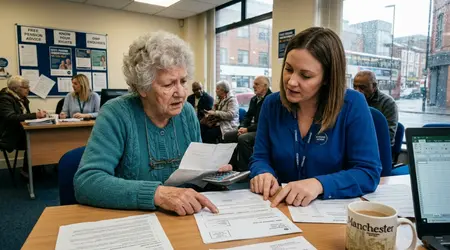
The underpayment issue does not affect everyone equally. It is strictly concentrated among those who retired under the old system.
Navigating these categories requires an understanding of how British pension law treated different marital statuses prior to 2016.
Category BL: Married Women
Under the old rules, married women were entitled to a Basic State Pension equal to 60% of their husband’s full Basic State Pension rate once their husband reached age 65.
If a woman had a poor NI record of her own, this “uplift” should have been applied automatically.
A major failure occurred for couples where the husband turned 65 before 17 March 2008. For this group, the law required the wife to make a formal, separate application to upgrade her pension.
Thousands of women never received notifications about this requirement.
If your husband retired before that 2008 date and your pension did not automatically increase to the 60% threshold, you may have a significant State Pension underpayment UK claim.
For those whose husbands retired after March 2008, the fix should have been automatic, but IT glitches mean many records were missed.
++ Healthy Start scheme UK 2026: how families can claim support
Category B: Widows and Widowers
When a husband passed away, his widow was legally entitled to inherit up to 100% of his Basic State Pension rate, depending on his NI contributions.
The DWP frequently failed to process these transitions correctly upon the registration of a death.
Widows often remained on their lower, married-rate pension rather than receiving the full inherited uplift.
In many cases, women who were completely divorced before their ex-husband passed away also qualify for an upgrade, provided they did not remarry before reaching State Pension age.
Also read: What the End of Income Support and Jobseeker’s Allowance Means for Claimants in 2026
The Over-80s (Category D)
Anyone who reached the age of 80, regardless of their marital status or their historical work record, was entitled to a minimum “Category D” State Pension, provided they met basic UK residency tests.
This non-contributory pension was designed as a social safety net. Yet, thousands of citizens turning 80 were left on paltry weekly amounts because the DWP failed to automatically upgrade them to the correct statutory minimum.
If you or an elderly relative turned 80 before 2016 and did not see an immediate bump in your weekly payments, this represents a classic State Pension underpayment UK scenario that warrants an immediate investigation.
Read more: Council Budgets and Welfare Reform: How Local Authorities Are Preparing for New Benefit Pressures
Calculating the Financial Impact
The sums involved in these rectifications are substantial because the underpayments often span a decade or more.
When the DWP uncovers an error, they are legally bound to pay back the difference retrospectively, often with interest or special compensation payments added to the lump sum.
| Affected Group | Eligibility Criteria | Average Estimated Payout |
| Married Women (Cat BL) | Husband turned 65 before March 2008; wife’s pension below 60% of his rate. | £4,000 – £9,000 |
| Widows (Cat B) | Did not receive the 100% inheritance uplift after husband’s death. | £10,000 – £12,000 |
| Over-80s (Cat D) | Reached age 80 but pension remained below the statutory non-contributory minimum. | £2,500 – £5,000 |
To illustrate the human cost, let us look at a hypothetical scenario. Consider Margaret, who retired in 2005 on a partial pension based on her own limited NI record.
Her husband, John, retired in 2007. Under the rules of that era, Margaret needed to fill out a specific form to claim her 60% uplift.
Because they were never informed, she stayed on her lower rate for nearly twenty years.
When her family finally initiated a State Pension underpayment UK check, the DWP discovered she had been underpaid by £45 per week over a vast timeframe.
Her backdated lump-sum payout exceeded £22,000. This highlights why checking historical records is not just an academic exercise, but a vital piece of financial housekeeping.
Steps to Verify and Claim Your Underpayment
If you suspect that you or a family member has been shortchanged, you should not sit back and wait for a letter from the DWP.
Taking proactive steps is the most effective way to ensure your file is reviewed. First, gather all relevant documentation.
You will need your own National Insurance number, your current State Pension breakdown letters, and, if applicable, your spouse’s or late spouse’s National Insurance number and date of birth. Having these figures on hand speeds up the inquiry process significantly.
Next, you must contact the Pension Service directly. The most effective route is to use the official State Pension underpayment online tool available via GOV.UK, or to call the Pension Service helpline.
Clearly state that you wish to request a formal review of your pension history under the State Pension LEAP (Legal Entitlements Administrative Practice) exercise.
If you are inquiring on behalf of a deceased relative, the process is slightly different but equally important. The law allows executors or next of kin to claim backdated money owed to an estate.
If a widow passed away without ever receiving her correct pension uplift, that money belongs to her beneficiaries.
You will need to provide a copy of the death certificate and proof that you are the legally authorised executor or administrator of the estate when making a State Pension underpayment UK inquiry for someone who has died.
Wider Institutional Criticisms and Reforms
The scale of this underpayment scandal has triggered intense scrutiny from parliamentary bodies, including the Public Accounts Committee.
Critics have rightly argued that the DWP should have possessed the technological capability to prevent these systemic errors from occurring in the first place.
The reliance on fragmented, antiquated IT architecture meant that vital life events recorded by one part of the government, such as the registration of a death or a marriage, were never seamlessly communicated to the pension systems.
Furthermore, this situation exposes the broader vulnerability of individuals trying to navigate the British social security infrastructure.
While the transition to the New State Pension in 2016 aimed to simplify matters by basing entitlements solely on individual NI records, it did nothing to automatically heal the wounds of those trapped in the older framework.
Financial professionals frequently point out that the complexity of these rules acts as a barrier to justice.
Therefore, anyone reviewing their pension should consider seeking advice from qualified bodies like MoneyHelper or Citizens Advice.
These independent organisations offer free, impartial guidance that can help you understand your entitlements before you launch a formal challenge against the DWP.
Securing Your Financial Rights
The State Pension underpayment UK correction process is a stark reminder that the state infrastructure is not infallible.
For decades, thousands of pensioners missed out on money they had rightfully earned through a lifetime of societal contribution or marriage.
As we move through 2026, the window for addressing these historical anomalies effectively is shifting, making immediate action paramount.
If you fall into any of the risk categories outlined in this guide, or if you suspect a deceased parent was shortchanged during their lifetime, take the time to audit those records.
Lean on trusted platforms like GOV.UK, seek clarity from independent advice services, and assert your right to a complete review.
Securing your correct financial entitlement is not just about boosting your bank balance; it is about restoring the dignity and financial security that the system accidentally eroded.
Frequently Asked Questions
How far back can a State Pension underpayment claim be backdated?
If the DWP is found to be at fault due to an administrative error under the LEAP exercise, the backdated payment can cover the entire period of the underpayment, often going back many years or even decades.
However, for certain married women whose husbands retired before March 2008, backdating may be legally limited to a rolling 12-month period if they failed to make an application when they were required to do so.
This makes a targeted professional review of your specific dates essential.
Will receiving a lump-sum back-payment affect my current benefits or tax status?
Yes, a large lump sum can impact your wider finances. The back-payment is treated as taxable income for the tax years in which it should have been paid, which might require a retroactive tax calculation by HM Revenue and Customs (HMRC).
Additionally, if you receive means-tested benefits such as Pension Credit, Housing Benefit, or Council Tax Support, a sudden influx of capital could push you over the savings thresholds, potentially reducing your ongoing benefit entitlements.
Can men be affected by the State Pension underpayment failure?
While the vast majority of those affected are women due to the historical design of the Category BL pension, certain men can be affected too.
Specifically, widowers or surviving civil partners who lost their spouses and were entitled to inherit a portion of their late partner’s National Insurance record may have faced similar system processing errors.
If you are a widower who retired under the pre-2016 system, it is well worth initiating a check.
What happens if the DWP rejects my inquiry but I still believe I am underpaid?
If the Pension Service reviews your file and concludes that no error occurred, you have the right to challenge that decision.
You can request a Mandatory Reconsideration, which forces a different DWP official to look at your case.
If that reconsideration is unsuccessful and you still have firm evidence of a discrepancy, you can lodge an independent appeal with the Social Security and Child Support Tribunal.
