
UK Small Boat Crossings: Record Daily Arrivals in 2026 Raise Questions About Border Security
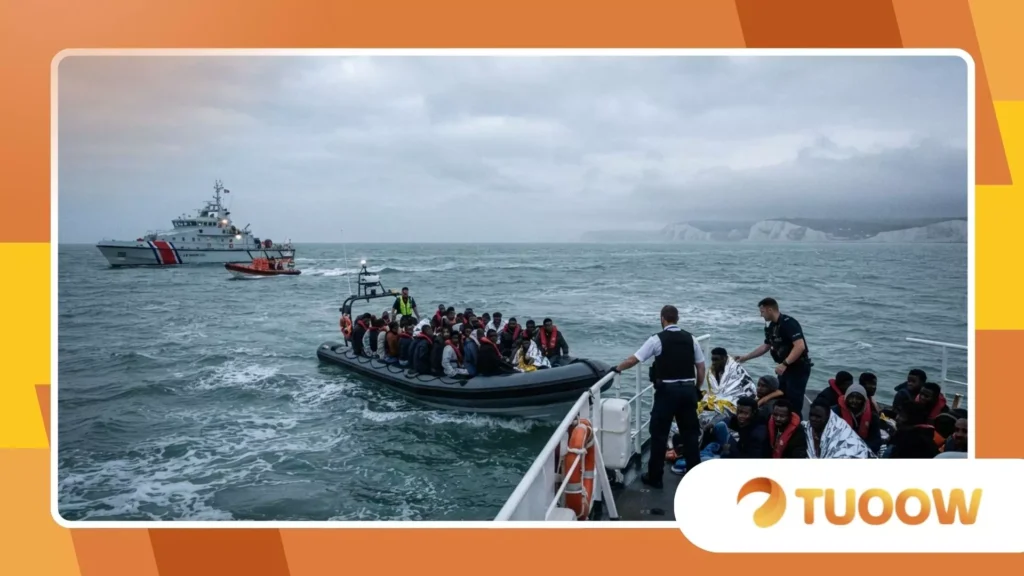
The debate surrounding immigration and border management in the United Kingdom has reached another critical juncture.
Recent reports highlighting UK small boat crossings reaching record daily arrivals in 2026 have reignited fierce political and public discussions regarding the effectiveness of current maritime security measures.
As hundreds of asylum seekers continue to make the perilous journey across the English Channel, policymakers, security analysts, and human rights organizations are forced to re-evaluate the strategies designed to secure the nation’s coastline.
This ongoing challenge not only tests the operational capabilities of the Home Office and the Border Force but also exposes the complex geopolitical realities governing modern migration routes.
Quick Navigation
- The Scale and Impact of 2026 Maritime Arrivals
- Operational Realities and Border Force Challenges
- Legislative Frameworks and Policy Debates
- Comparative Analysis of Channel Crossing Trends
- Conclusion and Final Reflections
- Frequently Asked Questions
The Scale and Impact of 2026 Maritime Arrivals
The sheer volume of individuals attempting to reach British shores via unseaworthy vessels has placed unprecedented pressure on reception facilities and local authorities.
Official statistics published by the Home Office indicate that cumulative numbers for the first half of 2026 have surpassed previous historical markers for similar periods.
These UK small boat crossings are characterized by shifting departure points along the northern French coastline, where organized crime networks continue to exploit vulnerable populations desperate to enter Europe and eventually the UK.
Local authorities in Kent and surrounding coastal regions bear the immediate brunt of these surges.
Processing centers, which were initially designed as temporary staging areas, face continuous logistical bottlenecks.
Community leaders and local council representatives have repeatedly raised concerns regarding stretched public services, temporary housing availability, and the social integration framework required to handle sustained influxes of arrivals.
Furthermore, the economic cost of managing emergency maritime interceptions, temporary accommodation, and subsequent legal processing runs into billions of pounds annually, fueling intense scrutiny from taxpayers and fiscal watchdogs alike.
++ British Economy 2026: Are Families Finally Seeing Relief From Rising Prices?
Operational Realities and Border Force Challenges
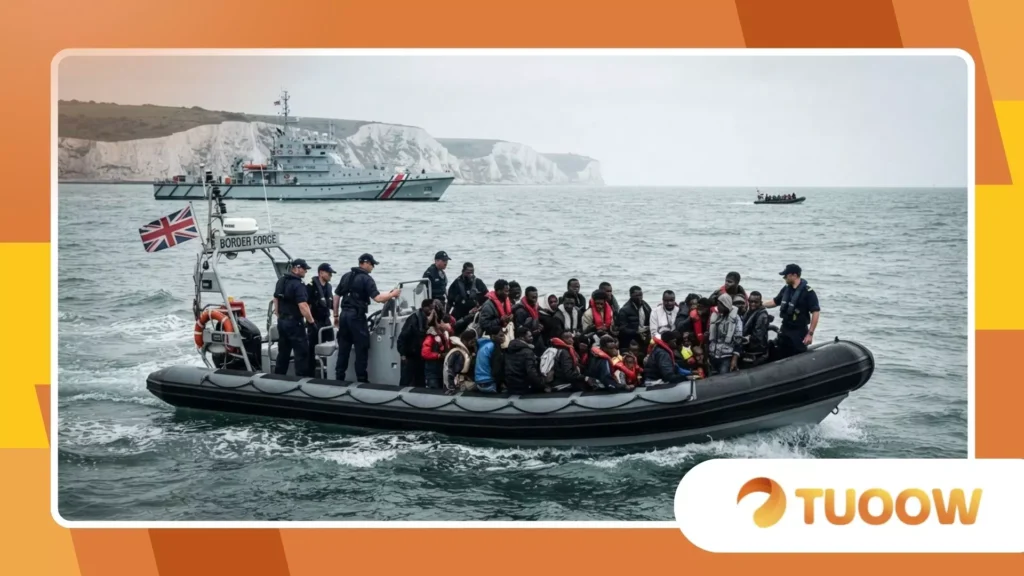
Securing over 300 miles of coastline while monitoring busy international shipping lanes presents a formidable operational puzzle for maritime law enforcement agencies.
The Royal Navy, HM Coastguard, and the Border Force work in tandem to detect, intercept, and rescue small boats.
However, smugglers constantly adapt their tactics, utilizing smaller, unflagged vessels, launching at night, and overloading rubber dinghies to maximize profits while minimizing the risk of immediate law enforcement intervention before reaching British territorial waters.
Intelligence sharing between British authorities and French law enforcement agencies remains a cornerstone of deterrence efforts.
Joint patrols and surveillance operations funded through bilateral agreements aim to disrupt supply chains by seizing engines, fuel, and inflatable hulls before they reach the beaches.
Despite these collaborative measures, the vast expanse of the Channel means that interception often transforms into a rescue operation rather than a prevention mechanism.
Once vessels enter UK waters, international maritime law and humanitarian obligations mandate that human life must be protected, complicating hardline deterrence strategies.
Also read: Biggest Overhaul of UK Migration Model in 50 Years
Legislative Frameworks and Policy Debates
The legislative response to irregular migration has been a dominant theme in British politics for years.
Successive governments have introduced various legislative packages intended to deter unauthorized entry, expedite deportations, and dismantle people-smuggling syndicates.
These measures often involve contentious debates regarding human rights compliance, international asylum obligations under the 1951 Refugee Convention, and the practical viability of offshore processing or third-country removal agreements.
Critics of current policies argue that punitive legal measures fail to address the root causes of migration, such as conflict, poverty, and political instability in countries of origin like Afghanistan, Syria, Sudan, and Eritrea.
They contend that without safe and legal alternative routes for asylum seekers, desperate individuals will continue to turn to criminal smugglers regardless of increased border patrols or legal deterrents.
Read more: Brit Awards 2026 Moves to Manchester: Cultural and Economic Impact Outside London
Conversely, proponents of stricter border controls maintain that national sovereignty and secure borders are non-negotiable prerequisites for maintaining public trust in the wider immigration system.
They argue that breaking the business model of human traffickers requires undeniable consequences for illegal entry, including swift returns and robust enforcement mechanisms.
Comparative Analysis of Channel Crossing Trends
Understanding the trajectory of irregular migration requires examining historical data alongside current operational outcomes.
The table below illustrates the evolving dynamics of cross-Channel arrivals over recent years, highlighting the persistence of the phenomenon despite shifting political strategies.
| Year | Estimated Annual Arrivals | Primary Departure Zones | Key Interception Measures |
| 2022 | Over 45,000 | Dunkirk to Calais coastline | Increased joint patrols, initial funding agreements with France |
| 2024 | Approx. 29,000 | Extended northern French beaches | Enhanced aerial surveillance, supply chain disruption |
| 2026 | Record daily peaks | Fluid launch points across Hauts-de-France | Advanced radar tracking, intensified intelligence sharing |
This data underscores a fundamental reality: enforcement alone has not eradicated the crossings.
Instead, the routes have grown more dynamic, forcing security agencies to rely heavily on real-time intelligence and technological investments to track small, low-profile watercraft that evade traditional radar systems.
As UK small boat crossings continue to dominate headlines, policymakers must balance aggressive law enforcement with sustainable, long-term international diplomacy.
Conclusion
The persistent surge in maritime arrivals highlights a deeply complex dilemma at the intersection of national security, international humanitarian law, and global geopolitics.
While enhanced border security, technological integration, and intelligence-led policing are vital components of any sovereign nation’s defense, they represent only one piece of a much larger puzzle.
Addressing the root causes of displacement and dismantling sophisticated transnational smuggling networks require sustained international cooperation and pragmatic policymaking.
Ultimately, resolving the challenges posed by UK small boat crossings will demand a balanced approach that safeguards national borders while upholding legal and humanitarian commitments.
Frequently Asked Questions
Why are more people crossing the English Channel in small boats?
The rise in crossings is driven by a combination of global conflicts, economic instability in countries of origin, and the adaptability of criminal smuggling networks operating in northern France.
With limited safe and legal routes available for asylum seekers, many feel compelled to utilize irregular pathways.
What role do French authorities play in stopping these crossings?
French law enforcement agencies patrol the coastline, intercept boats on French beaches, and dismantle supply caches.
Bilateral agreements between the UK and France facilitate joint intelligence operations and financial support aimed at stopping smuggling operations before boats are launched.
Are asylum seekers legally allowed to claim refuge after arriving in the UK?
Under international law and domestic legislation, individuals who arrive in the UK have the right to claim asylum.
However, the processing of these claims, their legal status, and potential removal to safe third countries are subject to stringent domestic laws and ongoing parliamentary debate.
