
UK rail strikes 2026 update: how new deals affect commuters
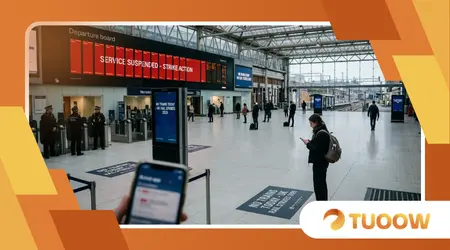
The landscape of British transport is undergoing a significant transformation as we move through March 2026.
For many, the morning ritual of checking the National Rail Enquiries app has become a reflexive habit born from years of industrial uncertainty.
However, the latest UK rail strikes 2026 update suggests a pivotal shift in the relationship between unions, train operating companies (TOCs), and the Department for Transport (DfT).
While the ghost of previous disruption still haunts certain routes, a series of landmark pay deals and structural agreements are beginning to offer the stability that commuters have craved since 2022.
Understanding these changes requires looking beyond the headlines.
The recent “Big Rail Fare Freeze” announced by the government, alongside the RMT’s acceptance of a 3.8% inflation-linked pay rise for Network Rail staff in January 2026, marks a de-escalation in national tensions.
Yet, as any seasoned London traveller will attest, the situation remains nuanced. Regional disputes, particularly within Transport for London (TfL), continue to test the resilience of the network.
This article provides a comprehensive analysis of the current state of play and what it truly means for your daily journey.
Overview of the 2026 Rail Landscape
- National Stability: RMT and Network Rail have secured a multi-year deal, significantly reducing the likelihood of wide-scale mainline closures.
- The “Fare Freeze” Factor: Regulated fares are frozen until March 2027, providing a financial buffer for season ticket holders.
- London Tube Disruption: A specific 12-day strike action remains planned for spring 2026 due to disputes over four-day working week proposals.
- Minimum Service Levels: New legislative frameworks are being tested to ensure core routes remain operational even during industrial action.
- Commuter Resilience: A shift towards “occasional” travel patterns is forcing operators to rethink flexible ticketing and reliability.
The End of National Deadlock? Analyzing the New Deals
The most significant component of the UK rail strikes 2026 update is the formal ratification of pay agreements that had stalled for nearly three years.
In early 2026, over three-quarters of RMT members working for Network Rail voted to accept a deal that protects wages against the Retail Price Index (RPI) without the immediate imposition of controversial “productivity” clauses.
This move has been welcomed by passenger watchdogs like Transport Focus, who noted that “certainty” is the most valuable commodity for the modern traveller.
For the average commuter using Avanti West Coast, Great Western Railway, or LNER, this means the threat of a “total network shutdown” has diminished.
The DfT’s latest data suggests that service loss due to strikes has more than halved compared to the 2023 financial year.
However, expertise in this field suggests that while national strikes are cooling, “localised” industrial action remains a potent tool for unions.
Commuters should remain wary of overtime bans which, although less dramatic than full strikes, can lead to short-notice cancellations that wreak havoc on a tightly packed work schedule.
++ The UK’s Relationship with the US: Stronger or Weaker?
The London Underground Exception: Spring 2026 Strikes
While the national picture looks brighter, the capital faces a different set of challenges. As of March 17, 2026, the RMT has announced a series of 24-hour strikes across the London Underground network.
These are scheduled to begin at midday on specific Tuesdays and Thursdays throughout March, April, and May.
The core of the dispute involves a proposed move to a four-day working week a plan supported by the drivers’ union ASLEF but rejected by the RMT over concerns regarding shift length and driver fatigue.
This highlights a growing trend in the UK rail strikes 2026 update: inter-union disagreement.
For commuters, the practical impact is severe disruption on all Tube lines, with services expected to be “extremely busy” on the Elizabeth Line and London Overground, which are currently not part of this specific action.
If you are travelling to campus or the City, the advice remains to allow double the usual journey time.
This scenario demonstrates that even when “pay” is settled, “conditions” and “working patterns” can still trigger significant friction.
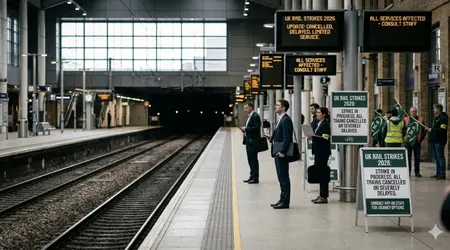
Financial Relief: The 2026 Fare Freeze and Regulated Tickets
In a move widely seen as an attempt to regain public trust, the government has implemented a freeze on regulated rail fares until March 2027.
According to National Rail, this is expected to save passengers approximately £600 million this year alone.
For someone commuting from Reading to London Paddington, this represents a tangible saving against what would have typically been a 4-5% increase.
It is important to note, however, that this freeze only applies to “regulated” tickets primarily season tickets, off-peak return tickets, and some anytime fares.
The UK rail strikes 2026 update reveals that “unregulated” fares, such as First Class and some Advance tickets, may still fluctuate.
This creates a complex financial landscape where savvy commuters are increasingly turning to split-ticketing apps and “Flexi Season” passes.
The Office of Rail and Road (ORR) has noted that rail use has returned to 97% of pre-pandemic levels, but the structure of that use has changed.
We are seeing fewer five-day-a-week commuters and more “Tuesday-to-Thursday” travellers, making the fare freeze a vital lifeline for those still tied to a physical office.
Minimum Service Levels: The New Safety Net
One of the most debated developments in the UK rail strikes 2026 update is the practical implementation of the Strikes (Minimum Service Levels) Act.
This legislation aims to ensure that even during full strike days, a certain percentage of the timetable—often cited as 40% on key corridors must run.
While the Transport Committee has warned about the operational risks of forcing staff to work, the government maintains this is essential for “economic security.”
For the commuter, this “safety net” is still in its experimental phase.
Initial reports from early 2026 trials suggest that while it prevents a total blackout, the resulting “skeleton service” is often so overcrowded that it becomes unusable for many.
If you rely on these services, professional advice is to treat a “Minimum Service” day with extreme caution.
It is not a return to normalcy; it is a contingency measure designed for essential workers rather than the general travelling public.
The Evolving Relationship Between Unions and Technology
A subtle but crucial part of the UK rail strikes 2026 update is the ongoing debate over the “digital railway.”
Part of the resolution in several regional deals involved agreements on how new technology such as automated signalling and AI-driven maintenance drones is integrated.
Unions have historically feared these as precursors to job losses, but the 2026 deals emphasize a “no compulsory redundancy” clause in exchange for adopting these efficiencies.
Network Rail has already begun deploying drones to improve response times for track inspections, a move that aims to reduce the “non-strike” disruptions that often irritate commuters just as much as industrial action.
As we navigate 2026, the focus is shifting from “how much we are paid” to “how we work alongside technology.”
For the passenger, this should eventually translate into a more resilient network, less prone to the “leaves on the line” or “signal failure” excuses that have plagued the industry for decades.
Practical Advice for Navigating the 2026 Network
Given the current UK rail strikes 2026 update, staying informed requires more than just checking a single source.
Relying on the National Rail “Status and Disruptions” page is essential, but following local TOC social media feeds often provides faster updates on “tactical” cancellations.
For those in London, the TfL Go app remains the gold standard for real-time Tube alternatives.
If your journey is cancelled due to industrial action, you are legally entitled to a full refund under the National Rail Conditions of Travel, even for non-refundable tickets.
Furthermore, the “Delay Repay” scheme applies if your train is significantly late due to strike-related staffing shortages.
In 2026, many operators have streamlined this process, allowing for automated claims through their respective apps a small but welcome improvement in the commuter experience.
| Feature | National Rail (Mainline) | London Underground (Tube) |
| Strike Status | Largely Resolved/Stable | 12 Days Planned (Spring 2026) |
| Pay Deal | 3.8% accepted (Jan 2026) | Ongoing dispute over 4-day week |
| Fares | Frozen until March 2027 | Subject to Mayor of London’s budget |
| Impact Level | Low to Moderate (Localised) | High (Mid-week disruption) |
| Primary Union | RMT / ASLEF | RMT |
The Road Ahead for UK Rail
The UK rail strikes 2026 update shows a nation finally emerging from a prolonged period of transport paralysis.
The combination of successful pay negotiations for Network Rail staff and the government’s fare freeze suggests a “truce” that favours the long-suffering commuter.
While the London Underground remains a flashpoint of industrial friction, the wider network is showing signs of the stability needed to support a modern, flexible economy.
However, industrial relations are inherently volatile; the peace of March 2026 depends entirely on the continued transparency of the Department for Transport and the willingness of unions to adapt to a digital future.
Ultimately, the rail network is the backbone of the UK’s infrastructure. While 2026 feels more reliable than 2023, the savvy traveller remains prepared.
The “new normal” is not a strike-free world, but a world where the impact of those strikes is better managed, legislated, and communicated.
Whether you are a daily commuter or an occasional visitor to the capital, the current deals represent a significant step toward a railway that serves the public first.
Frequently Asked Questions
Are there national rail strikes planned for the rest of 2026?
As of the latest UK rail strikes 2026 update, there are no confirmed national strike dates for the mainline network.
Most major unions have settled their pay disputes with Network Rail. However, localized strikes on specific lines or within London Underground are still occurring.
Will my season ticket price go up in 2026?
No. Regulated fares, which include most season tickets, have been frozen by the government until at least March 2027 to help with the cost of living and encourage people back to the railway.
How do the “Minimum Service Levels” affect my journey during a strike?
Under new 2026 regulations, train companies aim to run about 40% of their usual services on strike days.
However, these trains are likely to be extremely busy, and many smaller stations may still see no service at all. It is best to check with your specific operator (e.g., Avanti, GWR) 48 hours before you travel.
Can I get a refund if my train is cancelled due to a strike?
Yes. If your train is cancelled, delayed, or rescheduled due to industrial action, you are entitled to a full refund.
You can usually apply for this via the website or app where you purchased the ticket under the “Delay Repay” or “Fee-free refund” schemes.
What is the “four-day week” dispute on the Tube about?
TfL proposed a voluntary four-day working week for drivers to improve flexibility.
While the ASLEF union supports it, the RMT union is striking because they believe the longer shifts required will lead to increased driver fatigue and safety risks.
