
Local council bankruptcies UK 2026: causes and consequences
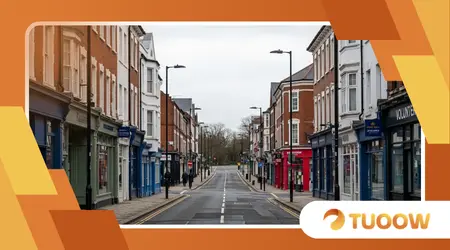
Imagine you are walking through your local high street in early 2026.
You might notice the streetlights are dimmed earlier than usual, the public library has moved to a “volunteer-only” model, or the potholes on your road have been marked with spray paint for months without a single repair crew in sight.
This isn’t necessarily a sign of general neglect; for many residents across Britain, it is the visible symptom of a profound fiscal collapse.
The reality of Local council bankruptcies UK 2026 is no longer a distant threat for a few outlier boroughs; it has become a systemic crisis affecting the very fabric of municipal governance from the South Coast to the Scottish Borders.
As an analyst who has spent nearly two decades dissecting the intersection of public policy and treasury management, I have watched this storm gather pace.
What started as isolated incidents of financial mismanagement in places like Thurrock or Woking has evolved into a structural deficit that even the most prudent chief financial officers can no longer balance.
For the average resident, this is not just a headline about “Section 114 notices” it is a direct threat to the safety nets and services that define their daily lives.
The Fiscal Cliff in 2026
- The Section 114 Surge: Why more than a dozen councils are expected to declare insolvency this financial year.
- Adult Social Care Strain: The relentless pressure of an ageing population on dwindling municipal budgets.
- The Commercial Property Hangover: How risky investments from the early 2020s are now defaulting.
- Council Tax Hikes: The legislative shift allowing bankrupt councils to raise taxes above the usual 5% cap.
What is driving the surge in local council insolvencies this year?
The explosion of Local council bankruptcies UK 2026 is the result of a “perfect storm” that has been brewing for over a decade.
At the core is a fundamental mismatch between the statutory duties councils must perform and the funding they receive from central government.
While the GOV.UK portals highlight the importance of local autonomy, the reality is that councils are mandated to provide adult social care and children’s services sectors where costs have ballooned by over 20% in real terms since 2022 due to inflation and increased complexity of need.
In my analysis, the “pioneer” bankruptcies we saw years ago were often blamed on specific bad decisions, such as high-stakes commercial property gambles or botched equal pay claims.
However, in 2026, we are seeing “well-run” councils falling over. The issue is now systemic.
When a council spends 70p of every pound it collects just on social care and temporary accommodation for the homeless, there is simply nothing left for the “discretionary” services like parks, youth clubs, or waste frequency that taxpayers actually see and feel.
++ UK crime rates 2026 report: what new data reveals nationwide
How does a Section 114 notice actually affect your daily life?
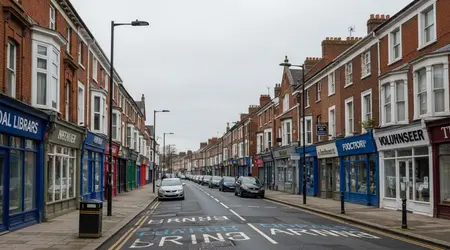
When a council issues a Section 114 notice, it essentially admits it cannot meet its expenditure commitments.
This triggers an immediate freeze on all new spending, except for that which is legally required to protect life or satisfy statutory duties.
For you, the resident, this often means an immediate “rationalisation” of services.
Imagine a scenario where your local leisure centre is sold to a private developer to balance the books, or the “Meals on Wheels” service is restricted to only the most critically ill.
Furthermore, Local council bankruptcies UK 2026 have led to a radical change in how Council Tax is applied.
Usually, councils need a local referendum to raise taxes above a certain threshold (typically 5%).
However, the Department for Levelling Up, Housing and Communities has increasingly granted “special dispensation” to insolvent councils to hike rates by 10% or even 15% without a vote.
You end up paying significantly more for significantly less a bitter pill for any household already struggling with the cost of living.
Case Study: The “Hollowed Out” Borough of Mid-shire
Consider a hypothetical family living in “Mid-shire,” a borough that declared insolvency in late 2025. The Smith family has two children and an elderly grandmother living with them who requires home-care visits.
- Social Care Impact: Grandmother’s care package is reviewed. Because the council is in “statutory-only” mode, her visits are reduced from three times a day to twice, placing a heavy burden on the parents to fill the gap.
- Education and Youth: The local youth centre, which kept their teenager engaged after school, is closed. The library’s heating budget is cut, making it unusable in winter.
- Environmental Services: Weekly bin collections are moved to once every three weeks to save on fuel and staff costs, leading to increased fly-tipping in their neighbourhood.
My recommendation for families in this position is to engage early with local community trusts.
As the council retreats, the “Third Sector” charities and volunteers is becoming the only remaining safety net, but they too are stretched to the limit.
Also read: Brit Awards 2026 Moves to Manchester: Cultural and Economic Impact Outside London
Why did the commercial investment strategy fail so many councils?
To understand the current crisis, we must look back at the “dash for yield” that occurred between 2016 and 2021.
Encouraged by low interest rates, many councils borrowed hundreds of millions from the Public Works Loan Board (PWLB) to buy shopping centres, office blocks, and even solar farms.
The logic was that the rental income would replace the funding cut by Westminster. However, the rise of remote work and the 2023 retail slump turned these “assets” into massive liabilities.
As Local council bankruptcies UK 2026 proliferate, the sheer scale of this debt is being laid bare.
Many councils are now paying more in interest on these loans than they spend on their entire libraries and parks departments combined.
It is a classic case of “borrowing short to invest long” without the necessary expertise in commercial real estate.
In my view, this was a failure of both local oversight and central government regulation, which allowed these high-risk portfolios to grow unchecked for far too long.
The Local Government Financial Health Matrix 2026
| Indicator | Pre-Insolvency Warning | Post-Section 114 Reality | Long-Term Consequence |
| Reserves | Rapidly depleting to cover overspends. | Frozen; used only for emergencies. | Zero resilience to future shocks. |
| Council Tax | Increases capped at 4.99%. | Potential hikes of 10% – 15% via dispensation. | Increased default rates among residents. |
| Services | Reducing “non-core” amenities. | Closure of all non-statutory services. | Total reliance on the voluntary sector. |
| Staffing | Hiring freezes and natural wastage. | Mass redundancies and “fire and rehire”. | Loss of institutional knowledge and expertise. |
| Assets | Strategic sales of surplus land. | Fire-sales of heritage assets and parks. | Permanent loss of public space/assets. |
What are the legal complexities of municipal bankruptcy?
One detail that is often ignored in the media is that a council cannot technically “go bust” in the same way a private company can.
It cannot be liquidated and cease to exist. Instead, the government often sends in “Commissioners” essentially high-powered civil servants who take over decision-making from elected councillors.
This creates a significant democratic deficit. Your local councillors, whom you voted for to protect your interests, lose their power to set the budget, and decisions are made by unelected officials focused purely on the balance sheet.
The legal framework surrounding Local council bankruptcies UK 2026 is incredibly complex.
For instance, while a council must provide social care, the level of that care is often a matter of legal interpretation.
This has led to a surge in judicial reviews, where residents sue their own councils for failing to meet their legal duties.
If you are a carer or someone relying on these services, consulting a public law specialist is often necessary to ensure that “budget cuts” do not infringe upon your human rights or statutory entitlements.
Is the current funding model fit for purpose in 2026?
The short answer is no. According to the Institute for Government, the way we fund local authorities in Britain is archaic.
It relies heavily on property values that haven’t been professionally revalued since 1991 (for Council Tax) and a Business Rates system that punishes high-street shops while letting online giants off lightly.
The analysis most experts agree on is that without a total overhaul possibly moving toward a local income tax or a more equitable land value tax the cycle of bankruptcies will continue.
Moreover, the “Bidding War” culture created by central government where councils must spend thousands of pounds on consultants to bid for small pots of “levelling up” money is inefficient.
It favours councils with the resources to write good applications rather than those with the greatest need.
Local council bankruptcies UK 2026 are a symptom of a system that prizes central control over local resilience.
We are seeing the consequences of a decade where “efficiency savings” were exhausted, leaving only the “bone” to be cut.
Critical Analysis: The Future of the “Social Contract”
The real danger of the 2026 crisis is the erosion of trust between the citizen and the state.
When you pay your Council Tax, there is an implicit agreement that the streets will be clean, the vulnerable will be cared for, and public spaces will be maintained.
When that contract is broken, the social fabric begins to fray. We are seeing increased civil unrest and a rise in “tax strikes” in areas where services have been cut to the absolute minimum.
In my analysis, the only way forward is a radical “Devolution Revolution.”
This would involve not just giving councils more power, but ensuring they have a diversified and stable revenue stream that isn’t solely dependent on the whims of the Chancellor of the Exchequer.
However, this requires a level of political bravery that has been absent from the national stage for years.
Until we address the “elephant in the room” the spiralling cost of adult social care every other fix is merely a sticking-plaque on a gaping wound.
Navigation Through the Municipal Crisis
We must accept that the era of “everything for everyone” at a local level is over, at least for the foreseeable future.
Residents need to become more active participants in their local democracy, not just at election time, but in the budget-setting process.
Understanding where your money goes is the first step in holding Commissioners and Councillors to account.
For those living in areas already affected by Local council bankruptcies UK 2026, the path ahead is difficult. It involves a “managed decline” of services and a greater reliance on neighbourly support.
However, by understanding the causes from the social care crisis to the property market collapse we can better advocate for the structural changes needed to rebuild our communities.
Frequently Asked Questions (FAQ)
Can my council take my house to pay off its debts?
No. Council debts are the responsibility of the corporate body of the council, not individual residents.
However, your Council Tax will likely increase significantly, and the value of your property may be affected if local services and infrastructure decline sharply.
Will my bins still be collected if my council is bankrupt?
Yes, waste collection is a statutory duty. However, the frequency and method of collection are not fixed by law.
You may see a shift from weekly to fortnightly or even tri-weekly collections, and you might be charged extra for “garden waste” or bulky item removal.
What happens to my local library or park?
These are often “discretionary” services. In a bankruptcy scenario, libraries are frequently closed or handed over to volunteer groups.
Parks may remain open but with minimal maintenance meaning grass is cut less often and play equipment may not be replaced if it breaks.
Is my pension safe if I work for a bankrupt council?
Local Government Pension Scheme (LGPS) funds are legally separate from the council’s day-to-day operating budget.
Even if a council issues a Section 114 notice, the pension fund remains a distinct entity, meaning your accrued pension benefits should be secure.
Who makes the decisions once a council is “bankrupt”?
Often, the Secretary of State will appoint Commissioners to take over the financial management of the council.
These individuals have the power to overrule elected councillors and make the tough decisions necessary to return the council to a balanced budget.
How can I find out if my council is at risk?
You can check the “Financial Resilience Index” provided by the Chartered Institute of Public Finance and Accountancy (CIPFA) or look for the “Annual Audit Letter” on your council’s own website.
Look specifically for warnings about “unallocated reserves” and “commercial investment risk.”
