
Housing Benefit phase-out UK 2026: impact on low-income tenants
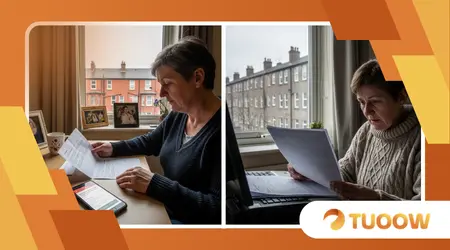
For many households across the UK, the familiar rhythm of the local council paying rent directly to a landlord is coming to a definitive end.
Imagine a tenant in a housing association flat in Birmingham or a private rental in Glasgow who has relied on the legacy benefits system for a decade.
One morning, a letter arrives from the Department for Work and Pensions (DWP). It isn’t a routine update; it is a Migration Notice.
This single document signals that the Housing Benefit phase-out UK 2026 is no longer a distant policy goal but a personal financial deadline that requires immediate action to prevent the risk of arrears or eviction.
- The Final Deadline: Why 31st March 2026 marks the end of an era for legacy working-age benefits.
- The Managed Migration Process: Understanding the three-month window provided by the DWP Migration Notice.
- Budgeting for the “Five-Week Wait”: How to navigate the transition gap between old and new payment cycles.
- Transitional Protection: The mechanism designed to ensure you aren’t financially worse off at the point of transfer.
- Paying the Landlord: The shift from direct council payments to the Universal Credit housing element.
Why is 2026 the “Point of No Return” for Housing Benefit?
The UK’s welfare landscape has been in transition for years, but the Housing Benefit phase-out UK 2026 represents the final closing of the gates for the old system.
By the end of March 2026, the DWP aims to have migrated all remaining working-age claimants from “legacy” benefits including Income Support and Employment and Support Allowance (ESA) onto Universal Credit.
This isn’t just a change in the name of the benefit; it is a fundamental shift in how the state supports low-income renters.
In my analysis of the DWP’s “Managed Migration” strategy, the most critical detail is that the move is not automatic.
If you receive a Migration Notice, the responsibility to act lies entirely with you.
Unlike a standard benefit review, failing to submit a Universal Credit claim within the three-month deadline stated in your letter will result in your current payments stopping completely.
The complexity here cannot be overstated: if you miss that window, you lose your entitlement to “Transitional Protection,” which could leave your household significantly worse off each month.
++ LCWRA benefit changes 2026: new rules for disability support
How does the “Housing Element” differ from traditional Housing Benefit?
For decades, Housing Benefit was often a “behind the scenes” payment managed by local authorities.
For many, it went straight to the landlord, providing a safety net that felt largely invisible. Under Universal Credit, this is replaced by the “housing element.”
The Housing Benefit phase-out UK 2026 means that, for the majority of tenants in England, Scotland, and Wales, the rent money will now be paid directly into their own bank account as part of one single monthly lump sum.
What many tenants forget to observe is that this requires a significant shift in personal budgeting. You become the manager of your own rent.
In my experience, this is where many low-income families feel the most pressure.
If your Universal Credit arrives on the 15th but your rent was traditionally paid on the 1st, you must be disciplined enough to ring-fence that housing element until the landlord calls.
There is a structural detail that is often ignored: if you are worried about managing this, you can request an Alternative Payment Arrangement (APA) to have the rent sent directly to the landlord, but this is usually only granted if you can prove you are in arrears or have specific vulnerabilities.

Navigating the transition: The “Five-Week Wait” and the two-week run-on
One of the most daunting aspects of the Housing Benefit phase-out UK 2026 is the initial gap in payments.
Universal Credit is paid in arrears, meaning there is typically a five-week wait for your first payment after you make a claim.
To mitigate this, the government provides a “two-week run-on” of your existing Housing Benefit.
This means that after you claim Universal Credit, your old Housing Benefit will continue to be paid for an additional fortnight to help bridge the gap.
However, a two-week overlap does not fully cover a five-week wait. My recommendation for you is to explore the “Advance Payment” option if you find yourself in immediate financial distress.
This is essentially an interest-free loan from the DWP to cover that first month.
The analysis more honest suggests that while this prevents immediate hunger or homelessness, it creates a new burden: the advance is paid back through deductions from your future Universal Credit payments over the next 24 months.
It is a vital tool, but one that must be used with a clear understanding of your future reduced monthly income.
Also read: What the End of Income Support and Jobseeker’s Allowance Means for Claimants in 2026
Case Study: A single parent in Manchester facing the 2026 shift
Imagine the case of Sarah, a single mother of two living in social housing in Manchester.
She currently receives Income Support and Housing Benefit, which goes straight to her housing association.
When she receives her Migration Notice as part of the Housing Benefit phase-out UK 2026, she has twelve weeks to claim.
Sarah is worried because her legacy benefits provide £1,200 a month, but a benefit calculator suggests Universal Credit might only give her £1,150.
Because Sarah is part of the “Managed Migration,” she qualifies for Transitional Protection.
This is a top-up payment that ensures her initial Universal Credit award matches her old legacy benefit amount exactly (£1,200). However, this protection is “eroded” over time.
If the standard allowance of Universal Credit rises due to inflation in April 2027, Sarah’s top-up will decrease by the same amount, keeping her total income flat while everyone else’s rises.
It is a temporary shield, not a permanent guarantee of income parity.
Comparing Legacy Housing Benefit vs. Universal Credit Housing Element
| Feature | Legacy Housing Benefit (Pre-2026) | UC Housing Element (Post-2026) |
| Payer | Local Authority (Council) | DWP (Central Government) |
| Payment Frequency | Weekly or Fortnightly | Monthly (usually) |
| Recipient | Often the Landlord | Usually the Tenant |
| Claim Method | Separate application to Council | Integrated into one UC claim |
| Arrears Risk | Lower (due to direct payments) | Higher (requires personal budgeting) |
Why the “Local Housing Allowance” freeze matters in 2026
For those in the private rental sector, the Housing Benefit phase-out UK 2026 is complicated by the Local Housing Allowance (LHA) rates.
The LHA determines the maximum amount of help you can get with rent based on local market rates.
While the government increased these rates in 2024 to the 30th percentile of local rents, many experts, including the Resolution Foundation, have warned that another freeze in 2026 could see the gap between “benefit rent” and “actual rent” widen once again.
There is a detail that is often ignored: if your rent is £800 but your LHA cap is £700, you must find that £100 “top-up” from your other benefits, such as the standard allowance intended for food and heating.
When you migrate to Universal Credit, it is vital to check if your LHA rate has changed.
If you have been on Housing Benefit for a very long time, you might be protected by older “exempt” rules that don’t apply to the new system.
Always seek advice from a specialist at Citizens Advice or a housing lawyer if your new housing element doesn’t cover your rent as expected.
Are there exceptions to the 2026 phase-out?
While the Housing Benefit phase-out UK 2026 is comprehensive for working-age people, some groups remain on the old system.
If you have reached State Pension age, you will generally continue to claim Housing Benefit through your local council.
Similarly, those living in “Supported Accommodation” (where care or support is provided) or “Temporary Accommodation” (placed by the council due to homelessness) will still have their rent met through traditional Housing Benefit, even if their other living costs are paid via Universal Credit.
This creates a “split-payment” scenario that can be confusing. In my reading of the current policy, this is intended to protect the most vulnerable who require more intensive management of their housing costs.
However, for the average low-income tenant in standard accommodation, the move is mandatory.
If you are unsure which category your housing falls into, check your tenancy agreement or contact your council’s benefits department. Transparency is your best defense against a sudden loss of income.
Read more: Council Budgets and Welfare Reform: How Local Authorities Are Preparing for New Benefit Pressures
The impact on Landlords: A shifting dynamic
The Housing Benefit phase-out UK 2026 doesn’t just affect tenants; it fundamentally changes the risk profile for landlords.
Many private landlords prefer legacy Housing Benefit because of the direct payment option. Under Universal Credit, landlords often feel less secure.
This has led some to be more hesitant about renting to those on benefits, ironically making it harder for low-income tenants to find homes at a time when the system is supposed to be getting “simpler.”
There are good reasons to question the DWP’s slow roll-out of the “Landlord Portal,” which allows social landlords to verify a tenant’s housing element more easily.
For private landlords, the process remains much more opaque. If you are a tenant, my professional advice is to be proactive.
Talk to your landlord as soon as you receive your Migration Notice. Explain that your payment dates will change and that you will receive the rent money directly.
Building that trust early can prevent a “notice to quit” later down the line if a payment is slightly delayed during the transition.
Conclusion: Preparing for the 2026 Welfare Landscape
The Housing Benefit phase-out UK 2026 is the final piece of the puzzle in the UK’s decade-long welfare reform.
While the goal is a simpler, “single-payment” system, the reality for low-income tenants is a period of significant administrative and financial risk.
The key to surviving this transition is proactivity. Do not wait for the 31st March deadline to pass. When your Migration Notice arrives, treat it with the same urgency as a final utility bill.
In my analysis, the most successful migrations are those where tenants utilize every support tool available from Advance Payments to local council discretionary housing payments (DHPs).
Use this time to build a small “buffer” in your bank account, however small, to cushion the five-week wait. The 2026 system requires tenants to be their own financial advocates.
By understanding the mechanics of the housing element and the importance of Transitional Protection, you can ensure that your home remains secure even as the system supporting it changes forever.
FAQ: Essential Questions for the 2026 Transition
1. What if I can’t manage my own rent payments under Universal Credit?
You can ask for an Alternative Payment Arrangement (APA) or a “Managed Payment to Landlord.”
You usually need to show a history of arrears or a specific vulnerability (such as a mental health condition or addiction) for this to be approved.
2. Is the “two-week run-on” a loan I have to pay back?
No. Unlike an “Advance Payment,” the two-week run-on of Housing Benefit is a final grant.
It is designed to ensure you aren’t left with zero housing support while the DWP processes your new claim. You do not have to repay this.
3. Will my council tax support change during the phase-out?
Universal Credit does not include Council Tax Support.
You must still apply for this separately through your local council. Many people forget this during the Housing Benefit phase-out UK 2026 and find themselves with unexpected council tax arrears.
4. What happens if I move house during the migration?
Moving to a new council area usually triggers a “natural migration” to Universal Credit immediately.
If you are planning a move in 2026, be prepared to start your Universal Credit claim on the day you move, as your old Housing Benefit cannot be transferred to a new local authority.
5. I am over State Pension age; do I have to move to Universal Credit?
Generally, no. Pensioners are currently excluded from the managed migration to Universal Credit for their housing costs. You will continue to receive Housing Benefit as long as you remain eligible.
