
Personal Independence Payment (PIP): Understanding the Current Eligibility Rules
Navigating the welfare landscape in the United Kingdom can often feel like deciphering a complex labyrinth, particularly when dealing with disability benefits.
For millions of residents managing long-term physical or mental health conditions, the Personal Independence Payment serves as a crucial financial lifeline designed to help mitigate the extra costs associated with daily living and mobility challenges.
Administered by the Department for Work and Pensions (DWP) under strict legislative guidelines found on GOV.UK, understanding how this benefit works requires more than just a surface-level glance at eligibility criteria.
Because this support mechanism is entirely non-means-tested meaning your personal savings, employment status, and household income have zero bearing on your entitlement the assessment focus shifts entirely toward functional impact rather than financial need.
Whether you are considering an initial application or supporting someone through the claims process, grasping the nuanced administrative hurdles, scoring matrices, and qualifying periods is essential for securing the right outcome.
++ State Pension: Everything Retirees Need to Know About the Latest Payment Rates
Quick Overview of Current PIP Framework
At a Glance:
- Target Audience: UK residents aged 16 to State Pension age with long-term conditions.
- Assessment Focus: How a condition affects daily activities and mobility, not the medical diagnosis itself.
- Financial Structure: Comprises two distinct components (Daily Living and Mobility), each paid at standard or enhanced rates.
- Core Requirement: Difficulties must have persisted for at least 3 months and be anticipated to last another 9 months.
Decoding the Core Eligibility Criteria
Before the DWP evaluates the specifics of how a health condition alters your daily routine, every applicant must clear several baseline administrative hurdles.
First, age restrictions dictate that you must be at least 16 years old and under your current State Pension age (typically 66) to initiate a brand-new claim.
Individuals who have already surpassed State Pension age without an existing claim generally look toward Attendance Allowance instead, maintaining a distinct boundary within the UK social security system.
Furthermore, strict residency parameters apply; applicants must typically have lived in England, Scotland, Wales, or Northern Ireland for at least two out of the last three years and possess a settled immigration status free from specific control restrictions.
Beyond these administrative baselines lies the crucial temporal test, widely recognized by welfare rights advisors and statutory guidelines on GOV.UK as the qualifying period.
Under these rules, your physical or mental health difficulties must have already been present for a continuous period of at least three months before you apply, and they must be reasonably expected to endure for a minimum of nine months moving forward.
This combined three-plus-nine-month rule ensures that Personal Independence Payment is reserved for enduring, long-term conditions rather than acute injuries or short-term illnesses.
An important exception exists under the Special Rules for End of Life (SREL), where terminally ill individuals with a confirmed prognosis of 12 months or less are fast-tracked, exempting them from both the waiting period and face-to-face assessments.
Read more: Council Budgets and Welfare Reform: How Local Authorities Are Preparing for New Benefit Pressures
Functional Impact Versus Medical Diagnosis
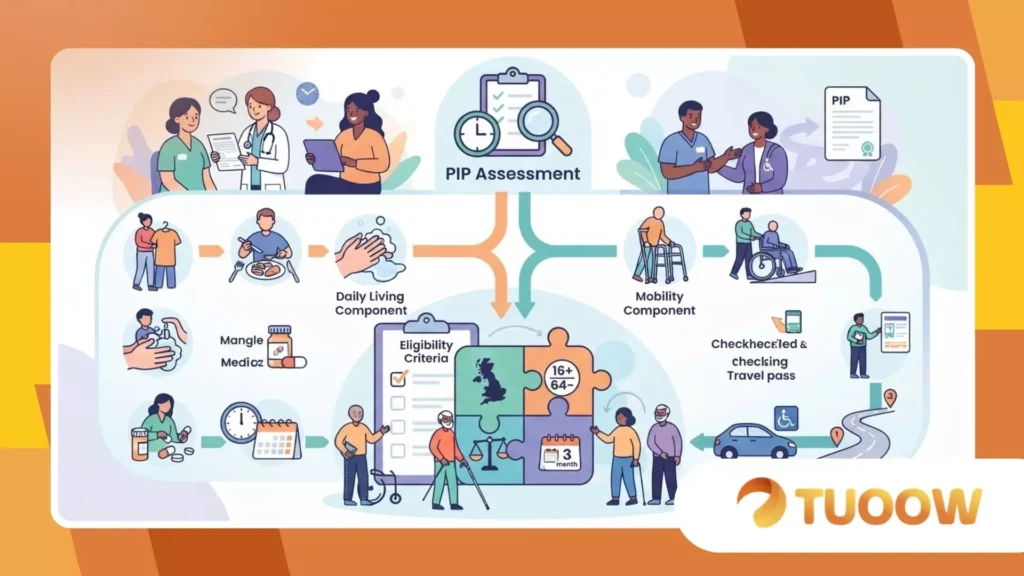
A widespread misconception among applicants is that possessing a specific medical label or clinical diagnosis guarantees a successful award.
In practice, independent assessment providers operating on behalf of the DWP evaluate individuals based on functional capability rather than clinical nomenclature.
Two people with identical diagnoses such as Multiple Sclerosis or severe clinical depression might experience entirely different day-to-day barriers, resulting in divergent assessment outcomes.
The evaluation system measures your capability across twelve specific activities: ten centered around daily living tasks (such as preparing food, washing, dressing, and managing medication) and two focusing on mobility (planning journeys and moving around).
To score points within these activities, your condition must restrict your ability to complete tasks safely, to an acceptable standard, in a reasonable time, or repeatedly.
For instance, if you can prepare a simple meal but doing so leaves you in agonizing pain or severe physical exhaustion that prevents you from repeating the task later in the day, the activity fails the test of repeatability.
The DWP evaluates your needs based on how they affect you on the majority of days across a twelve-month spectrum.
This fluctuating conditions rule protects claimants whose symptoms vary wildly day-to-day, ensuring that bad days are factored fairly alongside periods of relative wellness.
Current Financial Rates and Award Projections
| Component & Rate Type | Weekly Allowance | Estimated Monthly Equivalent | Primary Focus Area |
| Daily Living (Standard) | £76.70 | ~£306.80 | Assistance with basic nutrition, hygiene, and medication management. |
| Daily Living (Enhanced) | £114.60 | ~£458.40 | Higher level of ongoing daily support needs. |
| Mobility (Standard) | £30.30 | ~£121.20 | Help with planning routes and familiar journeys. |
| Mobility (Enhanced) | £80.00 | ~£320.00 | Severe physical barriers affecting independent physical movement. |
Navigating the financial structure requires understanding how individual points aggregate into monetary awards.
Scoring between eight and eleven points in the daily living category yields the standard rate, whereas achieving twelve points or more unlocks the enhanced tier.
Similarly, the mobility component splits thresholds based on independence levels regarding navigation and physical movement.
Because these figures undergo regular annual reviews by the government, consulting official resources like GOV.UK or Citizens Advice ensures you have the most accurate, up-to-date schedule of payments before submitting formal documentation.
Also read: Foster Care allowances UK: what carers can receive
Navigating the Application Process and Professional Guidance
Initiating a claim begins with a telephone call to the dedicated DWP claims line to register your intent, which formally timestamps your application date to protect potential backdating rules.
Following this initial contact, you will receive the comprehensive PIP2 questionnaire, titled “How your disability affects you”.
Completing this document requires meticulous attention to detail, matching your daily lived experience directly against the four reliability criteria: safety, acceptable standard, repetition, and timing.
Providing robust supporting evidence such as prescription lists, care plans, or professional letters from occupational therapists and GPs significantly strengthens the application package.
Given the inherent complexities and strict evidentiary thresholds mandated by the system, applicants frequently benefit from seeking independent advice from established advocacy groups like Citizens Advice or Disability Rights UK before submitting their forms.
Professional guidance ensures that descriptions of fluctuating conditions are articulated clearly in legal and administrative terms, minimizing the risk of misinterpretation during subsequent health assessments.
Remember that persistence is vital; if an initial decision is unfavorable, mandatory reconsideration processes and independent tribunal appeals frequently overturn restrictive initial rulings when comprehensive evidence is presented.
Conclusion
Securing the Personal Independence Payment is a rigorous process that demands patience, precision, and a thorough understanding of how functional limitations translate into statutory points.
By focusing your application on how your condition genuinely impacts your safety, independence, and daily routine rather than relying solely on medical labels, you align your submission directly with what assessors and decision-makers require.
As administrative guidelines and financial thresholds continue to evolve, staying informed through official channels remains your best safeguard.
Empower yourself with detailed personal diaries, consult qualified welfare advisors when obstacles arise, and approach the application journey prepared to articulate the full, unvarnished reality of your day-to-day life.
Frequently Asked Questions
Is the Personal Independence Payment affected by my personal income or savings?
No, Personal Independence Payment is entirely non-means-tested. Your employment status, capital savings, investments, and household income have zero impact on whether you qualify or how much financial support you receive.
Can I work while receiving this disability benefit?
Yes, you are legally permitted to maintain full-time or part-time employment, study, or receive occupational pensions while simultaneously claiming this benefit, provided you still meet the core functional eligibility criteria.
What happens if my health condition fluctuates day to day?
The DWP evaluates conditions based on a twelve-month rolling framework. If your symptoms impact your ability to complete tasks on more than 50% of days within that period, you can still score qualifying points, even if you experience occasional good days.
How should I start my application if I want to claim?
You must contact the official DWP telephone claims line to register your details and request the main application questionnaire, ensuring your claim date is formally logged from day one.
