
UK university admissions drop 2026: why applications decline
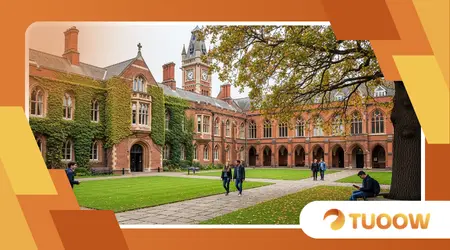
The pristine quadrangles of Britain’s most historic institutions are facing an uncharacteristic silence this academic cycle.
For decades, the trajectory of British higher education was one of constant expansion, but the landscape has shifted.
As we dissect the UK university admissions drop 2026, it becomes clear that we are witnessing a fundamental recalibration of how young people and mature students alike view the value of a degree.
It is no longer a simple rite of passage; it is a high-stakes financial decision made against a backdrop of global economic volatility and domestic policy shifts.
This decline is not merely a statistical blip on a UCAS spreadsheet. It represents a confluence of demographic changes, the soaring cost of living, and a pivot toward vocational alternatives.
For university vice-chancellors, this is a fiscal crisis; for prospective students, it is a moment of cautious hesitation.
To understand why the halls are emptier, we must look beyond the surface-level numbers and explore the structural fractures currently defining the British education sector.
The Economic Reality of Higher Education in 2026
The most immediate driver behind the UK university admissions drop 2026 is the sheer cost of participation.
While tuition fees for domestic students have seen modest adjustments, the real-term cost of living in university towns like Bristol, Manchester, and London has outpaced student maintenance loans.
Many applicants now find that their “full” loan barely covers the rent of a modest studio or a room in a shared house, leaving nothing for food, books, or transport.
The Bank of England’s stubborn interest rates over the past few years have also made the prospect of long-term debt more daunting.
Prospective students are now more financially literate than previous generations; they are using online calculators to project their lifetime repayments.
When the math shows a forty-year commitment to a “graduate tax” that may never be fully paid off, many are choosing to step off the academic treadmill before they even start.
Furthermore, the “graduate premium” the additional salary earned by degree holders compared to non-graduates is narrowing in several sectors.
In fields like digital marketing, coding, and creative arts, employers are increasingly prioritising portfolios and micro-credentials over a three-year BA Honours.
This shift in employer sentiment is a quiet but powerful engine driving the decline in traditional applications.
++ Digital exams rollout UK 2026: how GCSE testing is changing
Why Demographic Shifts are Thinning the Applicant Pool

Beyond the economy, we must acknowledge the “demographic cliff.”
Data from the Office for National Statistics (ONS) has long predicted a dip in the number of 18-year-olds in the UK population during the mid-2020s.
This natural ebb in the birth rate from nearly two decades ago means there are simply fewer bodies to fill the seats.
When combined with the UK university admissions drop 2026, this demographic reality creates a “perfect storm” for recruitment offices.
This isn’t just a British phenomenon, but the UK’s specific reliance on international recruitment to subsidise domestic teaching has made the situation more acute.
Recent changes to visa regulations, particularly regarding dependents, have made the UK a less attractive destination for postgraduate international students.
As international numbers dwindle, universities are forced to cut courses, which in turn makes them less appealing to local students, creating a downward spiral of prestige and availability.
The Rise of Degree Apprenticeships
One of the most positive reasons for the decline in traditional UCAS applications is the explosive growth of Degree Apprenticeships.
These programmes allow students to work for major firms such as Rolls-Royce, PwC, or the NHS while earning a degree paid for by the employer.
The “earn while you learn” model is a direct competitor to the traditional three-year residential degree.
In 2026, the prestige associated with an apprenticeship has finally reached parity with traditional university paths.
Parents, once the primary drivers of university attendance, are now encouraging their children to seek these debt-free alternatives.
This cultural shift is a major contributor to the UK university admissions drop 2026, as the brightest mathematical and technical minds opt for the boardroom over the lecture theatre.
Comparative Analysis: Higher Education Costs vs Alternatives
| Path | Average Annual Debt | Duration | Entry Salary Estimate | Long-term Outlook |
| Traditional Degree | £15,000 – £22,000 | 3 Years | £24,000 – £28,000 | High Debt, Academic Depth |
| Degree Apprenticeship | £0 (Salary Earned) | 3-5 Years | £21,000 – £25,000 | Zero Debt, Work Experience |
| T-Levels / Vocational | £0 | 2 Years | £20,000 – £23,000 | Faster Entry to Workforce |
| Direct Entry / Self-Taught | Variable | N/A | Variable | High Risk, High Flexibility |
How Policy Changes are Reshaping the Sector
The Department for Education (DfE) has recently tightened its focus on “low-value” degrees programmes that do not consistently lead to high-paying professional employment.
By threatening to cap student numbers on these courses, the government has inadvertently signalled to students that certain degrees might not be worth the investment.
This has led to a cooling effect across the humanities and social sciences.
While the intention was to drive quality, the result has been a general sense of unease. Students are now opting for “safe” subjects like Medicine, Law, or Engineering, or they are choosing not to apply at all.
The UK university admissions drop 2026 is, in many ways, a response to a narrative that has become increasingly critical of the “university-for-all” model that dominated the early 2000s.
The Mental Health and Gap Year Factor
We are also seeing a significant increase in the “intentional gap year.” Following the disruptions of the early 2020s, the current cohort of 18-year-olds is exhibiting a high degree of burnout.
Rather than rushing into a high-pressure academic environment, many are choosing to work for a year to build a financial cushion.
This delay in entry is often permanent. Once a young person enters the workforce and experiences financial independence, the prospect of returning to a “student lifestyle” of poverty and exams becomes less appealing.
This behavioural shift among Gen Z is a nuanced but essential factor in the current decline.
The International Student Crisis and Its Ripple Effects
For years, international students have been the financial lifeblood of British higher education.
However, the Home Office’s stricter stance on immigration has sent a message that the UK is “closed for business” to many global scholars.
Countries like Canada, Australia, and Germany have moved quickly to absorb this demand, offering more generous post-study work rights.
When a university loses its international revenue, it often has to increase the size of domestic seminars or reduce student support services.
Domestic students are noticing this decline in quality.
The UK university admissions drop 2026 reflects a consumerist mindset; if the “product” (the university experience) is perceived to be deteriorating while the price remains high, the consumer will naturally look elsewhere.
Read more: International Student Levy £925 from 2028: How the New Tax Impacts UK Universities and Students
Regional Disparities in Applications
It is also worth noting that the decline is not uniform across the country.
Prestigious Russell Group universities continue to see high demand, though even they are not immune to the softening of the market.
The hardest-hit institutions are the post-1992 universities in regional hubs. These universities often serve local, first-generation students who are the most sensitive to cost-of-living pressures.
When a local university struggles, the entire regional economy feels the impact. From student bars to local landlords, the admissions drop has a multiplier effect.
Understanding the UK university admissions drop 2026 requires a look at the “leveling up” agenda, which seems to be faltering as educational opportunities in the North and Midlands face significant budgetary headwinds.
Looking Forward: Is the Degree Still Worth It?
Despite the gloomy headlines, a degree remains a powerful asset when chosen correctly. The challenge for 2026 is one of discernment.
Prospective students are no longer asking if they should go to university, but why they should go. The focus has shifted from “the experience” to “the outcome.”
Universities are now having to work harder to prove their worth. We are seeing a surge in industry-integrated learning, where students spend a semester on placement.
This “hybrid” model may be the key to reversing the UK university admissions drop 2026 in future cycles.
If institutions can bridge the gap between theory and the modern workplace, they may find the lecture halls filling up once again.
However, for the current year, the trend is clear. Higher education is undergoing a painful but perhaps necessary correction.
The era of unchecked expansion is over, replaced by a more sober, pragmatic approach to adult education.
Reflecting on the Future of British Education
In summary, the current situation is a wake-up call for the entire sector. The UK university admissions drop 2026 is a symptom of a society re-evaluating the traditional milestones of adulthood.
As we move further into the decade, the distinction between “vocational” and “academic” will likely continue to blur, which may ultimately lead to a more robust and flexible workforce.
For those currently weighing their options, the advice remains the same: consult with careers advisors, look at the long-term data on GOV.UK regarding graduate outcomes, and consider the total cost of borrowing.
The university path is still a brilliant journey, but in 2026, it is a journey that requires a very clear map and a sturdy financial compass.
Frequently Asked Questions (FAQ)
What is the main reason for the decline in applications?
The primary drivers are a combination of the rising cost of living, higher interest rates on student loans, and a growing preference for Degree Apprenticeships which offer a debt-free route to a career.
Are all universities affected by the admissions drop?
No. High-ranking Russell Group institutions still see high demand, but many “modern” or post-1992 universities are seeing significant decreases in domestic and international applicants.
Is it still worth going to university in 2026?
Yes, for many careers especially in regulated professions like medicine, architecture, and engineering—a degree is essential. However, for other sectors, students are weighing the cost against alternative qualifications.
How do international visa changes affect domestic students?
International students subsidise the cost of teaching domestic students. A drop in international numbers can lead to budget cuts, larger class sizes, and fewer course options for UK-based students.
Should I take a gap year instead of applying now?
Many students are choosing this to save money. However, it is important to check if your desired university allows deferred entry or if the entry requirements might change in the following year.
